May 4, 2026
Catering Marketing for Restaurants: How to Fill Your Calendar with Big Orders
If you run an independent restaurant, catering might be the biggest growth opportunity you're ignoring. The average catering order is five to ten times larger than a typical dine-in check. The margins on bulk food production are better. And once you land a corporate account that orders every week, you've got predictable revenue you can actually plan around.
But here's the catch: none of that matters if your catering marketing is weak or nonexistent.
Most restaurant owners build a catering menu, maybe add a page to their website, and then wait for the phone to ring. When it doesn't, they assume catering "just isn't for us." The real problem isn't your food or your pricing. It's that the people who would order catering from you don't even know it's an option.
This guide walks you through how to market your catering program effectively, even if you don't have a marketing team, a big budget, or any experience running campaigns. We'll cover everything from making catering visible at every customer touchpoint to landing repeat corporate accounts that fuel your bottom line all year long.
Why Catering Marketing Deserves Its Own Strategy
You probably already market your restaurant in some form. Maybe you post on Instagram, run a Google Business Profile, or send occasional emails. But catering marketing is a different game with a different customer.
The person ordering lunch for 40 people at an office isn't making the same decision as someone picking a spot for Friday night dinner. They're usually an office manager, executive assistant, or event planner. They care about reliability, ease of ordering, professional presentation, and whether you can handle volume without a hiccup.
That means your general restaurant marketing won't automatically translate into catering sales. You need dedicated messaging, dedicated channels, and a dedicated effort to reach the right people.
Think of your catering program as a separate business living inside your restaurant. It needs its own marketing plan.
The Real Cost of Ignoring Catering Marketing
When you don't actively market catering, you leave a vacuum. And that vacuum gets filled by chains with massive marketing budgets and third-party marketplaces that take hefty commissions on every order. Your regulars who love your food end up ordering Panera for their office meeting because they had no idea you could handle it. That's not a failure of your kitchen. It's a failure of visibility.
Make Your Catering Impossible to Miss
The single biggest barrier to catering growth is obscurity. Your existing customers, the people who already love your food, often have no clue you cater. Fixing that is step one, and it costs almost nothing.
In your restaurant: Put signage near the register, on table tents, and on your takeout bags. A simple "We cater! Ask us about feeding your next meeting or event" goes a long way. Include a catering flyer or card in every takeout and delivery order. Every bag that leaves your restaurant is a marketing opportunity.
On your website: Don't bury catering on a submenu three clicks deep. It should be a prominent navigation item, ideally with its own landing page that includes your catering menu, pricing, minimum order info, lead times, and a clear way to place an order or request a quote.
On your Google Business Profile: Update your GBP description to mention catering. Add catering photos. Use Google Posts to promote catering specials or seasonal packages. When someone searches "catering near me," you want Google to know you belong in those results.
On social media: Post about catering regularly. Show photos of catering setups, packed trays heading out the door, and happy clients at events. If you only post plated dishes and dining room shots, nobody will associate your restaurant with large orders.
The goal is to make catering so visible that a customer would have to actively try to miss it.
Build a Catering Menu That Sells Itself
Your catering menu shouldn't be a photocopy of your regular menu with bigger quantities. It needs to be designed for the catering buyer's mindset.
Price per person, not per item. Office managers and event planners think in headcounts. "Feeds 10 people for $15/person" is instantly understandable. "$45 tray of chicken, $38 tray of rice, $22 tray of salad" forces them to do math they don't want to do.
Create packages and bundles. Offer two or three tiers: a basic lunch package, a premium package, and maybe a deluxe option with appetizers and dessert. Packages simplify the decision and increase your average order value. Name them something memorable that reflects your brand.
Include everything they need. Plates, napkins, utensils, serving spoons, condiments. If the client has to scramble for supplies, they'll remember the hassle more than the food. Build disposable serviceware into your pricing so it feels seamless.
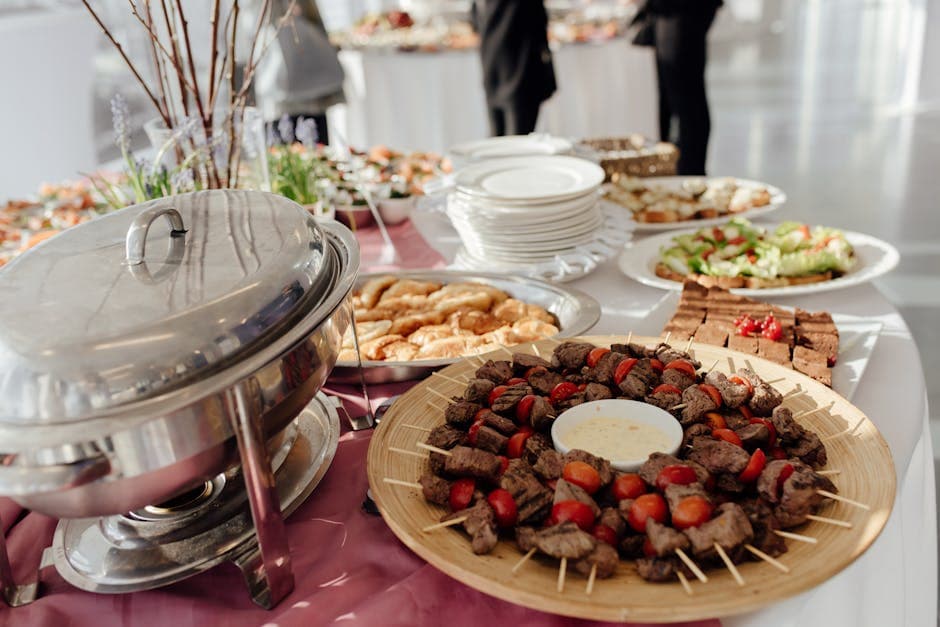
Show professional photos. If you can, invest in a few photos of your catering spreads set up and looking beautiful. This matters more than you think. The person ordering is often trying to impress their boss or their client. They need to see that your food looks the part.
Target Corporate Accounts (They're Your Golden Ticket)
One-off event catering is great, but recurring corporate accounts are where the real money lives. An office that orders lunch every Tuesday is worth more annually than a dozen one-time birthday party orders.
Here's how to find and land those accounts:
Identify nearby businesses. Walk around your neighborhood. Which offices, co-working spaces, medical practices, car dealerships, and corporate parks are within delivery range? Make a list.
Do direct outreach. This doesn't have to be fancy. Print a simple one-page catering menu with your best packages and pricing. Walk it into nearby offices and ask to leave it with the office manager or front desk. Include a first-order incentive, like 10% off or a free dessert tray.
Offer a free tasting. For large potential accounts, offer to drop off a complimentary sample lunch for their team. Yes, it costs you some food. But if it turns into a weekly $500 order, that's one of the best investments you'll ever make.
Follow up. Most restaurant owners drop off a menu and never follow up. A polite email or call a week later asking "Did you get a chance to look at our catering options?" can be the difference between landing the account and being forgotten.
Make reordering effortless. Once a corporate client places their first order, the experience of reordering should be frictionless. A direct online ordering system where they can save favorites and reorder in a few clicks will keep them coming back instead of drifting to a competitor.
Use Email Marketing to Stay Top of Mind
Here's a common scenario: a customer orders catering from you once, has a great experience, and then three months later orders from somewhere else. Not because they were unhappy, but because they simply forgot about you when the next event came up.
Email marketing solves this. It keeps your restaurant in front of past catering customers so that when the next need arises, you're the first name they think of.
Segment your catering customers. Keep a separate list (even a simple spreadsheet works) of everyone who has placed a catering order. Their email, company name, what they ordered, and when.
Send regular, relevant emails. You don't need to email every day. Once or twice a month is plenty. Share seasonal catering menus, holiday pre-order deadlines, new package options, or a simple "Planning a meeting this month? We've got you covered" reminder.
Time it right. Many offices plan catering on Mondays and Tuesdays for the week ahead. Sending a catering-focused email on Monday morning puts you in front of the right person at the right time.
If building email campaigns feels overwhelming, tools like SWIPEBY's AI ReMarketing Campaigns can automate this for you, sending targeted emails to past customers without you having to write a word.
Leverage Reviews and Social Proof
When an office manager is deciding between you and a chain for a 50-person lunch, they're going to check your reviews. Catering-specific reviews and testimonials are incredibly powerful.
Ask for reviews after every catering order. A quick follow-up text or email saying "Thanks for your order! If you have a minute, we'd love a Google review" can build a library of social proof over time.
Highlight catering in your responses. When someone leaves a review mentioning your catering, respond and thank them specifically. This signals to anyone reading reviews that you're active in the catering space.
Feature testimonials on your website. Pull quotes from happy catering clients and put them on your catering page. "SWIPEBY Accounting has been ordering from [Your Restaurant] every Friday for six months. The food is always on time and our team loves it." That kind of testimonial does more selling than any ad.
Share catering wins on social media. Got a big order going out? Snap a photo of the spread. Tag the client if they're okay with it. Show the world that real businesses trust you with their events.
Don't Let Marketplaces Eat Your Margins
Third-party catering marketplaces can help you get discovered, and there's nothing wrong with using them as one channel. But if they become your only channel, you're handing over a significant chunk of your profit on every order.
The smarter play: use marketplaces to acquire new customers, then convert those customers to direct ordering for repeat business.
Include a card or flyer in every marketplace catering order with a message like: "Thanks for ordering! Next time, order direct at [yourwebsite.com] and get 10% off." Give them a reason to come straight to you.
Make direct ordering easy. If your website's ordering process is clunky or confusing, people will default to the marketplace because it's simpler. Your direct ordering experience needs to be clean, mobile-friendly, and fast. A dedicated first-party online ordering system can make this seamless while keeping every dollar of profit in your pocket.
Build the relationship. Once a catering client orders direct, you own that relationship. You have their email, their order history, and the ability to reach out whenever you want. That's an asset no marketplace will ever give you.
FAQ
How much should I spend on catering marketing? You don't need a big budget to start. Most of the strategies above, like in-store signage, direct outreach to offices, and social media posts, cost little to nothing. If you want to invest more later, even $200 to $300 per month on targeted email campaigns or local digital ads can drive meaningful results.
What's a good minimum order for catering? This depends on your food costs and logistics, but many independent restaurants set minimums between $150 and $300. The key is making sure every catering order is worth your time after accounting for food costs, packaging, and delivery labor.
Should I offer free delivery for catering orders? For orders above a certain threshold, yes. Free delivery removes friction and makes you more competitive. Build the delivery cost into your per-person pricing so it feels free to the customer but you're still covered.
How do I handle catering orders during busy service times? Plan catering prep around your slow periods. Most office catering needs to arrive by 11:30 a.m. or noon, so you can prep trays in the morning before your lunch rush. As your catering volume grows, consider dedicating a staff member to catering production on heavy days.
How quickly can I expect to see results from catering marketing? Some tactics work fast. Adding signage and flyers can generate inquiries within days. Direct outreach to offices can land accounts within weeks. Email marketing and social media build momentum over months. The restaurants that commit to consistent catering marketing for 90 days almost always see meaningful growth.
Start Building Your Catering Profit Engine Today
Catering marketing isn't complicated, but it does require intention. You can't just add a catering page to your website and hope for the best. You need to make catering visible everywhere, build a menu designed for the buyer, actively pursue corporate accounts, stay in front of past customers, and own the ordering channel so you keep your margins.
The good news? You don't need a marketing department to do this. Start with the basics: put a flyer in every takeout bag this week, walk a menu into three nearby offices, and post about catering on social media. Small, consistent actions add up fast.
And if you're looking for a way to handle the email marketing, online ordering, and social media side of things without adding more to your plate, SWIPEBY's AI-powered platform was built for exactly this kind of work. It might be worth a look as your catering program grows.
Your food is already good enough to win catering business. Now it's time to make sure people know about it.
SWIPEBY AI
Interested in Increasing Sales Using AI?
Book a demo today and learn how SWIPEBY can help you automate marketing, serve more guests, and grow revenue without working more hours.