April 27, 2026
Restaurant Profit Margin Explained: What to Expect and How to Improve Yours
If you run an independent restaurant, you already know the math can be brutal. You pour your heart into the food, the experience, the late nights, and the early mornings. Then you look at your bank account and wonder where all the money went. Understanding your restaurant profit margin is the first step toward changing that story. In this article, we'll walk through what profit margins actually mean for restaurants, what's considered normal, where your money is really going, and most importantly, how to keep more of it.
What Is a Restaurant Profit Margin, Exactly?
Let's start simple. Your profit margin is the percentage of your revenue that you actually get to keep after all expenses are paid. If your restaurant brings in $1 million in sales over a year and you have $950,000 in total costs, your profit is $50,000, which is a 5% profit margin.
There are two types of profit margin you should know:
Gross Profit Margin vs. Net Profit Margin
Gross profit margin measures what's left after you subtract only the cost of goods sold (COGS), meaning the food and beverage costs. If you spend $300,000 on ingredients and your revenue is $1 million, your gross profit margin is 70%.
Net profit margin is the number that really matters. This is what's left after you subtract everything: food costs, labor, rent, utilities, insurance, marketing, equipment, credit card processing fees, and every other expense. For most restaurants, this is a much smaller number.
When people talk about restaurant profit margins being thin, they're talking about net profit margin. And thin is an understatement.
What Is the Average Restaurant Profit Margin?
The typical net profit margin for a full-service restaurant falls somewhere between 3% and 9%. Fast-casual and quick-service restaurants sometimes do a bit better, landing between 6% and 9%, partly because they tend to have lower labor costs per transaction.
Here's a general breakdown by restaurant type:
- Full-service (sit-down) restaurants: 3% to 5%
- Fast-casual restaurants: 6% to 9%
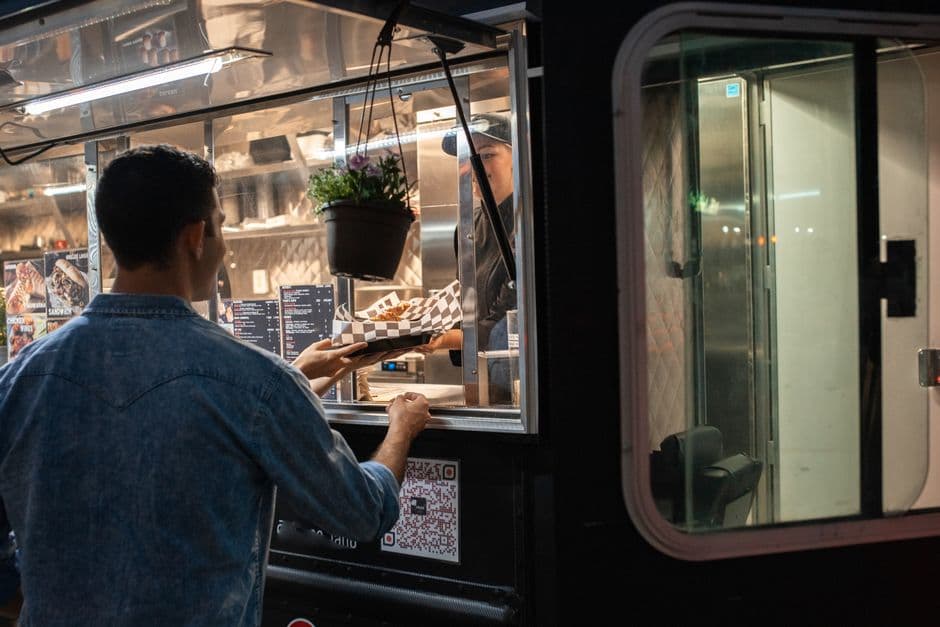
- Food trucks: 6% to 9%
- Catering operations: 7% to 8%
- Pizzerias and delivery-heavy concepts: 7% to 12% (lower labor, higher volume potential)
If you're running at a 5% net profit margin, you're in a perfectly normal range. That doesn't mean you should settle for it, but it does mean you're not doing anything wrong. The restaurant industry is simply one of the toughest businesses when it comes to margins.
For context, many other industries operate with net margins of 10% to 20% or more. Restaurants work harder for less. That's just the reality.
Where Does All the Money Go? Breaking Down Restaurant Costs
To improve your restaurant profit margin, you need to understand where every dollar goes. Here's a rough breakdown of how the average independent restaurant spends each dollar of revenue:
Food and beverage costs (COGS): 28% to 35% This is your biggest variable cost. It includes everything you buy to make your menu items. Anything above 35% is a red flag worth investigating.
Labor costs: 25% to 35% Wages, salaries, payroll taxes, benefits, workers' comp. Labor is often your largest single expense, and in today's market with rising minimum wages and staffing challenges, it's only getting harder to manage.
Occupancy costs (rent and related): 5% to 10% Rent, property taxes, insurance on the building. This is mostly fixed, which means it hurts more when sales dip.
Operating expenses: 15% to 25% Utilities, equipment maintenance, supplies, technology, marketing, credit card fees, licenses, and a dozen other line items that add up fast.
What's left: 3% to 9% That's your profit. The money you actually get to take home, reinvest, or save for a rainy day.
When you lay it out like this, you can see why even small changes in any category can have an outsized effect on your bottom line.
How to Improve Your Restaurant Profit Margin
Now for the part you came here for. You can't control everything (you can't negotiate the weather or the economy), but there are real, practical moves that independent restaurant owners make every day to protect and grow their margins.
1. Know Your Numbers Weekly, Not Monthly
Too many restaurant owners only look at their financials once a month, or worse, once a quarter. By then, a problem that started in week one has been bleeding cash for weeks.
Get into the habit of reviewing your food costs, labor costs, and sales numbers every week. You don't need fancy software. A simple spreadsheet or even your POS reports can give you what you need. The goal is to spot trends early. If your food cost percentage jumped from 30% to 34% this week, you want to know now, not 30 days from now.
2. Engineer Your Menu for Profit
Menu engineering sounds technical, but it's really just being intentional about what you're selling and at what price. Every item on your menu has a food cost and a popularity level. The magic happens when you focus on promoting the items that are both popular and profitable.
Consider this: if a dish costs you $3 to make and you sell it for $15, that's an 80% gross margin on that item. If another dish costs you $8 to make and sells for $16, that's only 50%. Both sell well, but one is doing much more for your bottom line.
Highlight high-margin items on your menu. Put them in the top right corner (where eyes naturally go), add a photo, or have your servers mention them. Remove or reprice items that aren't pulling their weight.
3. Reduce Food Waste Relentlessly
The average restaurant wastes between 4% and 10% of the food it purchases. That's money going directly into the trash.
Track your waste. Keep a simple log in the kitchen of what gets thrown out and why. Was it over-prepping? Spoilage from poor rotation? Incorrect orders? Once you see the patterns, you can fix them.
Better prep lists, proper FIFO (first in, first out) storage, and right-sized portions all contribute to lower waste. Even cutting food waste by 2% of revenue on a $1 million restaurant saves $20,000 a year. That could double a slim profit margin.
4. Control Labor Without Cutting Quality
Labor is the expense that feels most personal because it involves your team. But controlling labor doesn't mean working people to the bone or understaffing your shifts.
It means scheduling smarter. Use your sales data to predict busy and slow periods and staff accordingly. Cross-train employees so your prep cook can help on the line during a rush. Eliminate overtime by managing schedules more carefully.
Technology can help here too. AI-powered tools that handle tasks like answering the phone, responding to reviews, or running social media posts can free up your team's time (or reduce the need to hire someone specifically for those tasks). For example, an AI phone assistant can handle common questions about hours, directions, and menu inquiries so your staff stays focused on the guests in front of them.
5. Stop Bleeding Money on Third-Party Delivery Fees
If you're using third-party delivery apps, you already know the sting. Commission fees of 15% to 30% per order can completely wipe out your profit on those sales. On a $30 order, you might be handing over $6 to $9 just for the privilege of reaching a customer who probably would have ordered from you anyway.
First-party online ordering, where customers order directly through your own website, lets you keep the full margin. It also gives you access to customer data (emails, order history) that you own and can use for future marketing. If a meaningful chunk of your revenue comes from delivery and takeout, moving even some of those orders to a commission-free ordering system can meaningfully improve your restaurant profit margin.
6. Raise Prices Strategically
Many independent restaurant owners are afraid to raise prices because they don't want to lose customers. That fear is understandable but often overblown. Customers expect prices to go up, especially when ingredient and labor costs are rising across the industry.
The key is to raise prices strategically. You don't need to increase every item by the same amount. Focus on items where demand is strong and price sensitivity is low. A $0.50 increase on a popular appetizer or a $1 increase on an entree that everyone loves will rarely cause pushback. Across thousands of transactions, those small increases add up to real money.
Test increases gradually and watch your sales mix. If an item's order volume drops significantly after a price increase, you can always adjust.
7. Build Repeat Business Instead of Chasing New Customers
It costs significantly more to acquire a new customer than to bring back an existing one. Yet many restaurant owners spend most of their marketing energy trying to attract new faces while neglecting the people who already love their food.
Email marketing to your existing customers, encouraging Google reviews, staying active on social media, and running occasional promotions for return visits are all low-cost ways to increase visit frequency. Even getting your average customer to come in one extra time per month can dramatically change your revenue without increasing your fixed costs.
Since your rent, insurance, and equipment costs stay the same whether you serve 100 customers a day or 120, those extra visits flow almost entirely to your bottom line.
FAQ: Common Questions About Restaurant Profit Margins
Is a 10% profit margin good for a restaurant? A 10% net profit margin is excellent for an independent restaurant. Most full-service restaurants operate between 3% and 5%. If you're at 10%, you're outperforming the vast majority of the industry. Keep doing what you're doing, and make sure you have systems in place to maintain it.
Why is my restaurant busy but not profitable? This is more common than you'd think. High sales don't guarantee high profits. The usual culprits are food costs that have crept up, overstaffing during slow periods, heavy reliance on third-party delivery (with their steep commissions), waste, and menu items that are popular but have poor margins. Start by reviewing your COGS and labor as a percentage of sales.
How often should I review my restaurant's profit margin? At minimum, monthly. Ideally, you should be tracking key cost percentages (food cost, labor cost) weekly. The faster you spot a problem, the less money you lose before fixing it.
Should I cut costs or increase revenue to improve margins? Both, but in the right order. First, plug the leaks. Eliminate waste, reduce unnecessary expenses, and fix any operational inefficiencies. Then focus on growing revenue through better marketing, menu optimization, and building repeat business. Revenue growth on top of a lean operation is where real profit improvement happens.
What's the biggest threat to restaurant profit margins right now? Rising labor costs and food inflation are the two biggest pressures most independent restaurants face. Third-party delivery commissions are also a major margin killer for restaurants that rely heavily on off-premise orders. The owners who are navigating this best are the ones staying close to their numbers and adapting quickly.
The Bottom Line
Your restaurant profit margin might be thin, but it doesn't have to stay that way. The owners who consistently improve their margins aren't doing anything exotic. They're tracking their numbers, making smart menu decisions, reducing waste, scheduling with intention, and building systems that bring customers back again and again.
You don't have to overhaul everything at once. Pick one or two areas from this guide and focus on those first. Even small improvements in food cost or labor efficiency can add thousands of dollars to your bottom line over a year.
If you're looking for ways to reduce the number of tools you're paying for while also saving your team time on things like phone calls, social media, and online ordering, SWIPEBY's AI-powered platform was built specifically for restaurants like yours. It's worth exploring if you want to simplify your operations and protect your margins at the same time.
SWIPEBY AI
Interested in Increasing Sales Using AI?
Book a demo today and learn how SWIPEBY can help you automate marketing, serve more guests, and grow revenue without working more hours.